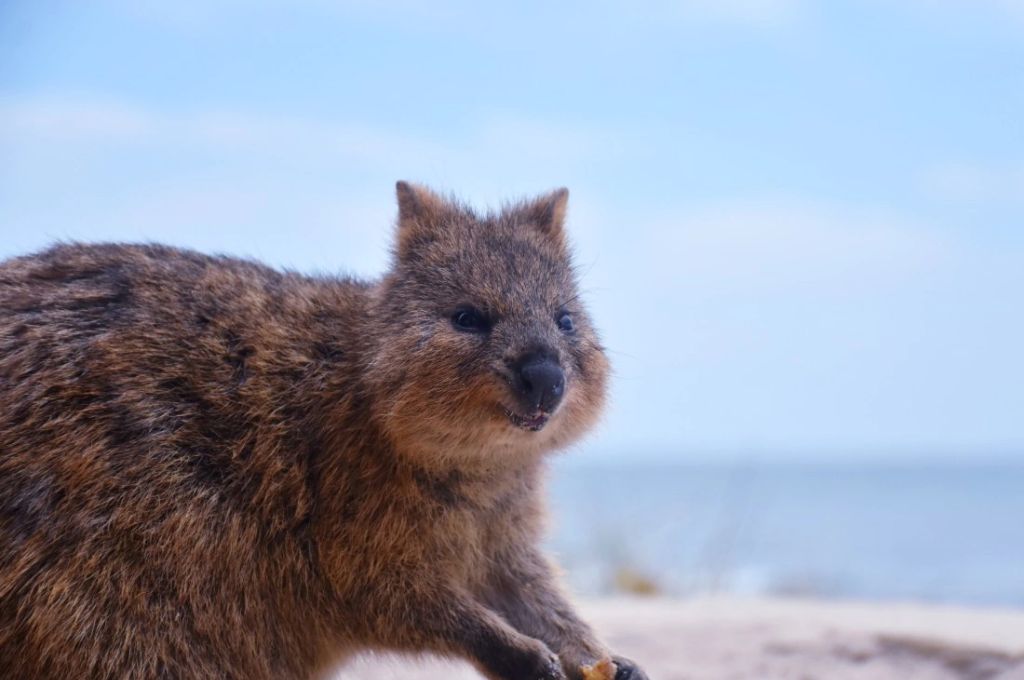
Small, furry, and always looking like it is about to tell a funny secret, the quokka has captured hearts across the globe. Known widely as the happiest animal in the world, this cheerful creature earned its fame because its mouth naturally curves upward into what looks like a warm, beaming smile. While social media turned the quokka into an international celebrity, there is much more to this unique animal than just cute selfies.
What Is a Quokka?
A quokka is a small marsupial, which means it belongs to the same animal family as kangaroos, wallabies, and koalas. Like its larger relatives, a female quokka carries and nurses its newborn baby, called a joey, inside a front pouch.
In terms of appearance, a quokka is roughly the size of a domestic house cat, weighing between 2.5 and 5 kilograms. It has thick, grayish-brown fur, small rounded ears, black button-like eyes, and a short tail. Because its hind legs are built for jumping, the quokka hops around the ground in the exact same way a kangaroo moves.
Where Do Quokkas Live?
Quokkas are native to southwestern Australia. The largest and most famous population lives on Rottnest Island, a sunny destination located just off the coast of Perth. A smaller number also survive in protected forest areas on the mainland.
Rottnest Island actually gets its name from this little creature. When Dutch explorer Willem de Vlamingh visited the island in 1696, he mistook the quokkas for giant rats and named the place Rotte nest, which translates to “rat’s nest.” Today, the island is free of foxes and domestic cats, making it a safe haven where quokkas can thrive without fear of introduced predators.
Daily Life and Habits
Quokkas are mostly nocturnal, meaning they rest during the hot daylight hours and become active after sunset. During the day, they shelter under thick bushes and shady plants to stay cool.
As herbivores, their diet consists entirely of vegetation. They eat grass, leaves, stems, bark, and native seeds. Quokkas swallow their food without chewing it thoroughly, later regurgitating it to chew again, which helps them extract every bit of nutrition from tough Australian scrub plants. They can also survive for long periods without fresh drinking water, getting most of their hydration directly from the green succulent leaves they eat.

Why They Seem So Friendly
Unlike many wild animals that run away when people approach, quokkas on Rottnest Island are remarkably trusting. Because they grew up for generations without natural predators on the island, they developed very little natural fear. When visitors arrive, curious quokkas often hop right over to inspect them.
However, strict conservation laws protect them. Visitors are prohibited from touching or feeding quokkas. Human food like bread or fruit can make them seriously ill, and touching them disrupts their natural behavior. Keeping a respectful distance ensures that these friendly marsupials stay safe, healthy, and smiling for generations to come.